

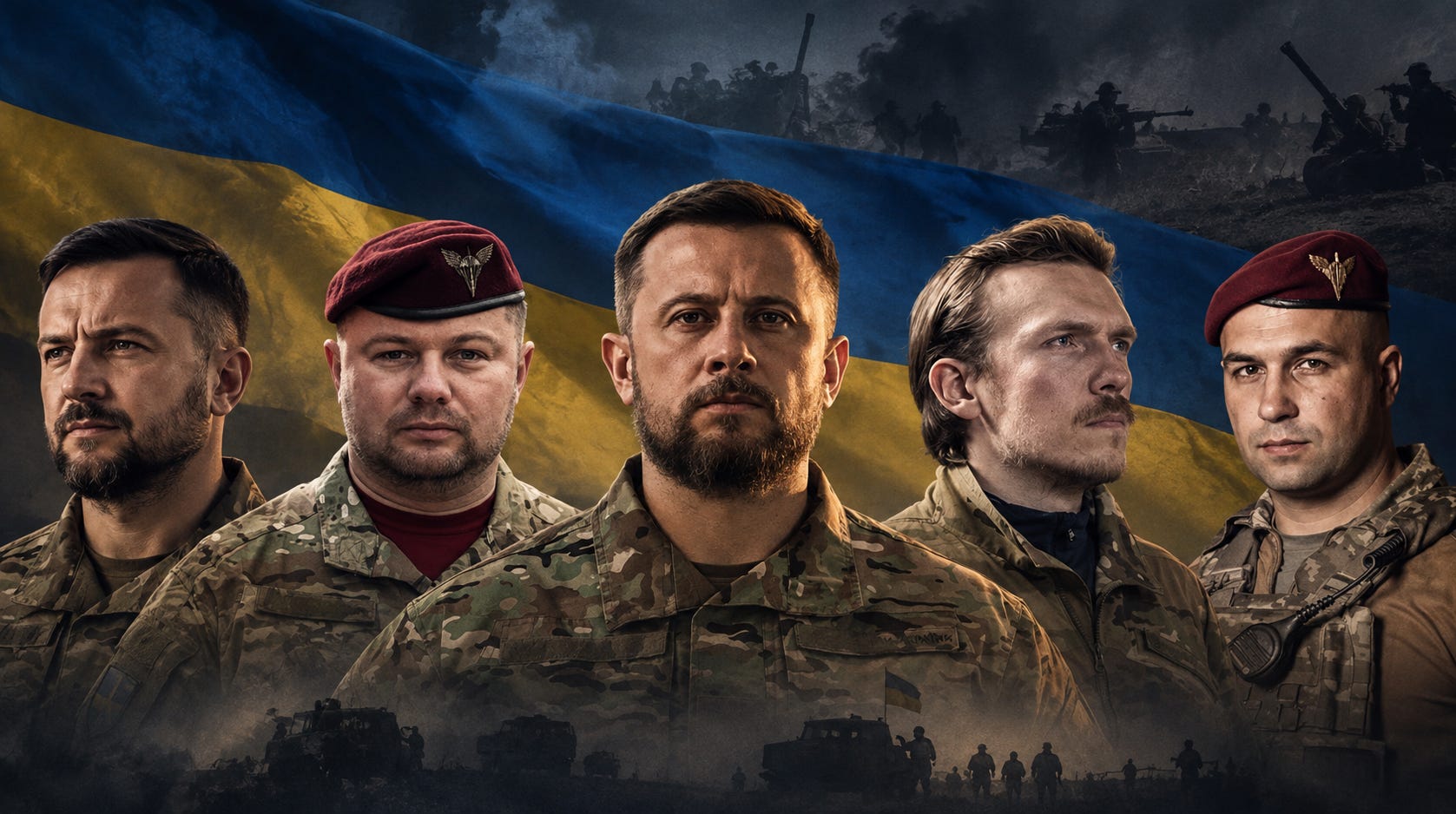
Part 2 of an in-depth strategic assessment from Ukraine’s senior military commanders, offering rare insights into the evolving battlefield, military strategy, technological transformation, and the future of warfare. You can read the Part 1 here
Andriy Biletskyi — Commander of the 3rd Army Corps
Denys Prokopenko — Commander of the 1st Corps “Azov” of the National Guard of Ukraine
Ihor Obolenskyi — Commander of the 2nd Corps “Khartiia” of the National Guard of Ukraine
Oleh Apostol — Commander of the Air Assault Forces of the Armed Forces of Ukraine
Yevhen Lasiichuk — Commander of the 7th Rapid Response Corps of the Air Assault Forces of Ukraine
Denys Prokopenko — Commander of the 1st Corps “Azov” of the National Guard of Ukraine
Assessment of War and Defense of Donbas
The situation in the Dobropillia direction is quite difficult. We are facing three armies, the 76th Airborne Division, and Russian naval infantry formations. In fact, the ratio of military units we are operating with is significantly in the enemy’s favor.
It is approximately one to six when comparing the strength of military units and the number of personnel, forces, and capabilities that the enemy is deploying.
Everyone knows perfectly well what Rubicon is. According to our data, the enemy currently has around 100 crews, and one-third of the entire Rubicon force is deployed specifically in the Dobropillia direction.
As of now, the enemy has failed to achieve its strategic objective of capturing Dobropillia by the end of summer. It has failed in its summer offensive campaign, achieving only limited tactical gains.
