
General Biletskyi on The Formula for Ukrainian Victory

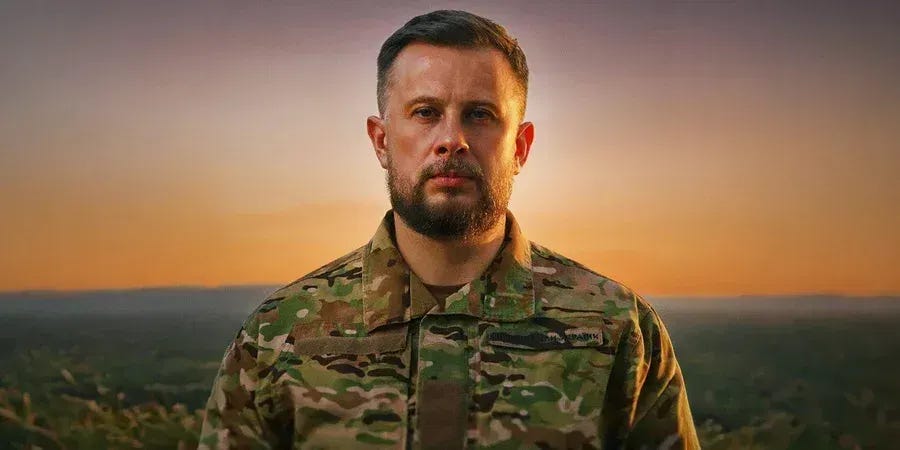
General Andriy Biletskyi is one of the most experienced and respected commanders in the Armed Forces of Ukraine. The 3rd Army Corps under his command is widely regarded as one of the most effective formations in the Ukrainian military, distinguished by high operational competence, efficiency, discipline, and morale.
CONTENT
Stabilizing the Front
How Have These Changes Affected the Enemy?
How Was the Sector Stabilized?
Ground Robots: A New Standard of Warfare
Control of the Air Domain
UAVs: Scale That Is Changing Warfare
Military Medicine
The Foundation of Everything: Training
The Human Factor and Changing Mindsets
Consequences of the Reform
"Ukraine will not prevail through mass or brutality. It will prevail through technological progress, intelligence, and the will to reform.”
A year ago, the Third Army Corps became a proving ground for testing these ideas in practice. Today, the first results can already be assessed. All of the anticipated advantages appeared sooner than expected, while the challenges and drawbacks proved far less critical than we had imagined.
On June 4, 2025, the 3rd Army Corps deployed along the sector stretching from Borova to Lyman. We became the first corps of the Armed Forces of Ukraine to occupy and fight within its own designated area of responsibility using its constituent brigades under a single command.
For an army that had spent years fighting under conditions of constant personnel rotations, temporary operational groupings, and fragmented responsibility, this was a difficult step. Today, its results can be evaluated.
Stabilizing the Front
Before the corps reform began, Russian forces were advancing actively in what is now our sector. Ukraine was losing an average of 70 square kilometers of territory per month. Faster than we expected, the corps managed to turn this sector into one of the most stable and resilient sections of the front.
This does not mean that the enemy has stopped attacking. Assault operations, air strikes, and infiltration attempts continue.
However, infiltration, for example, was effectively overcome precisely because of the corps system.
When we arrived, the enemy was infiltrating 15–20 kilometers deep, and this was a major problem. Today, all brigades of the corps operate as a single organism, maintaining constant coordination and supporting one another. There are no gaps between units and no unassigned sectors. Unhealthy competition has been eliminated—and with it, infiltration. In addition, the corps structure provides new tools that did not exist within the temporary operational formations previously used.
How Have These Changes Affected the Enemy?
Our sector remains one of Russia’s priority directions.
